8 May 2026 · 6 min read
Why slow ceramics last
A small studio's case for buying less, and what a fingerprint, a slight wobble, and a kiln that decides actually mean.
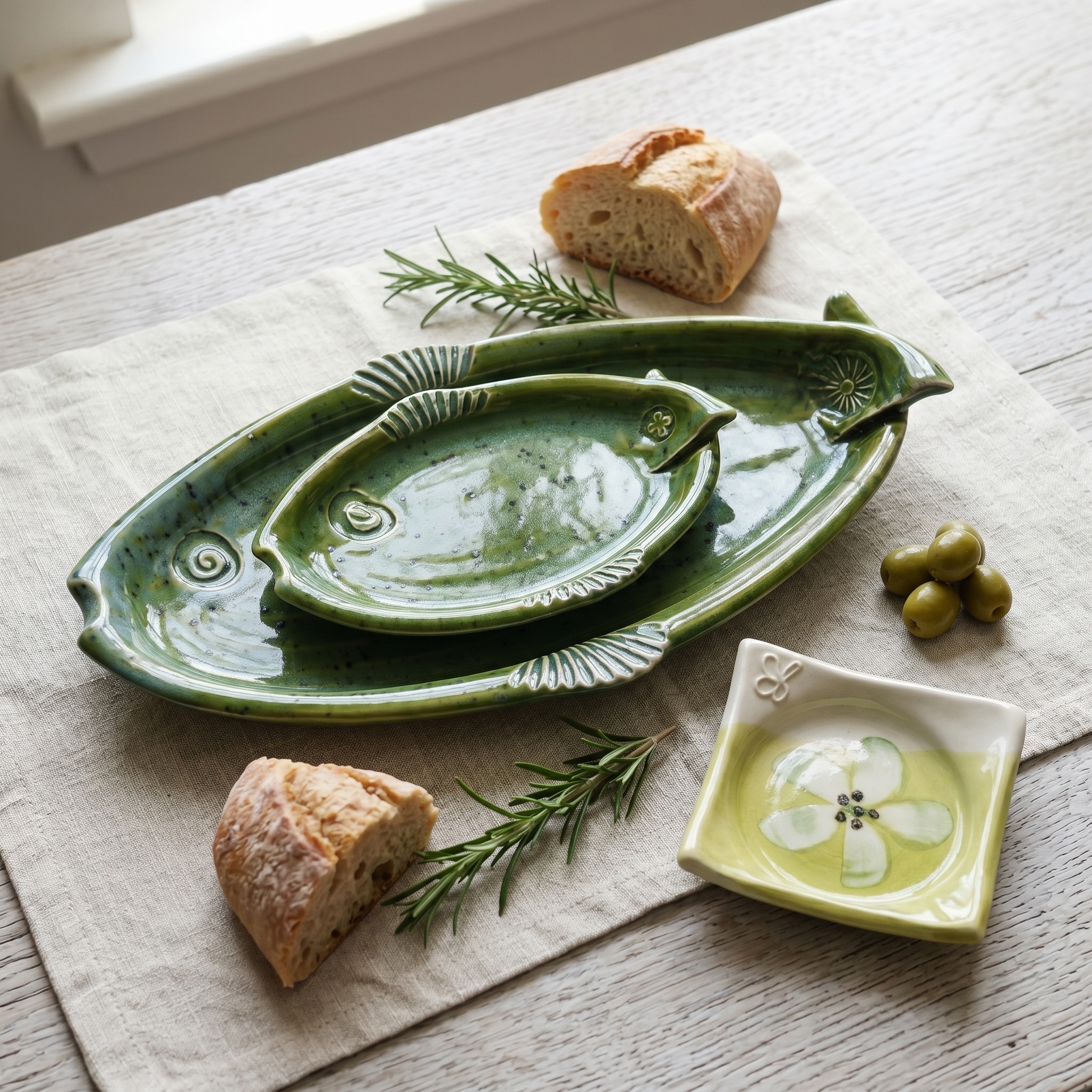
I make about thirty pieces a week. A factory in southern Europe makes thirty pieces every nine seconds. The factory pieces are food-safe, dishwasher-safe, and cost a quarter of what mine do. The case for the slow ones is not what you'd guess.
What mass-produced ceramics actually are
Most kitchen ceramics in Europe come from one of about forty large factories, in Portugal, Italy, Turkey, Poland. They're made by slip-casting (clay poured into plaster moulds) or by ram-pressing (clay pressed between two hardened steel forms). The shapes are identical to a tolerance of less than a millimetre. The glazes are sprayed by robotic arms. The decoration is decal, a printed pattern fired onto the surface in a third firing. None of this is a criticism. It's what makes a €4 dinner plate possible.
The trade-off is that every plate is the same. There is no language in the surface, because the surface was applied without a hand. The plate doesn't have a story. It has specifications.
What slowness adds
A piece that passes through one pair of hands picks up evidence. A slight wobble in the rim, because the wheel was running half a turn slower that morning. A fingerprint on the underside, where the foot was steadied for trimming. A glaze that pools deeper in one fin than another, because the dip was held for half a second too long. None of these are mistakes. They're the trace of a hand, and they're the difference between a piece you own and a piece you have.
I see customers, sometimes years later, who can pick out which piece in a stack of three is theirs. The shape is the same. The glaze name is the same. They know it because they've spent every morning with it.
A factory plate is a record of a process. A handmade plate is a record of a person.
What slow ceramics don't do
I want to be honest. Slow ceramics aren't more durable than factory ceramics. A well-made stoneware plate from a factory will outlast me. Both of mine and theirs are food-safe and dishwasher-safe. Neither breaks more easily, both break the same way, dropped from waist height onto a tile floor.
Slow ceramics also won't replace your everyday kitchenware. The pieces I make take time, and they're priced accordingly. A reamer is €52, a small fish plate is €32. You don't furnish a whole kitchen at those prices, and you shouldn't try. What slow ceramics do is sit alongside the everyday, the one piece you reach for because it has presence, the platter you pull out for Sunday lunch, the soap dish in the bathroom that quietly elevates the whole room.
A small studio's case for buying less
I make about fifteen hundred pieces a year. I know the biography of each one. I know which kiln load it came from, which morning it was thrown on, what the weather was doing the week it dried. None of this is information the customer needs. But it's information that exists, and that's the difference.
The argument I make to people who visit the studio is not "buy more." It's almost the opposite. Buy fewer things, and let the things you buy mean something. Pay for the hours, not the form. A €4 plate from a factory is a useful object. A handmade plate from a small studio is a useful object that also has a name behind it, mine, and a place where it was made.
What lasts is not the piece
Pieces break. Not often, but eventually. What lasts is the relationship, the platter you ate from for a decade, the reamer you used every morning until the ridges wore down, the soap dish that survived three moves. By the time those pieces wear out, they've gathered enough use that they belong to a kitchen, a ritual, a person. That's the actual durable thing.
Slow ceramics don't last because they're stronger. They last because they're worth keeping.
If any of this rings true, look through the shop. I'd rather you bought one piece you'll use every day than three pieces that go in a cupboard. The studio runs on small numbers, and that's on purpose.
, Nika
Studio · Piran · 8 May 2026
More from the studio
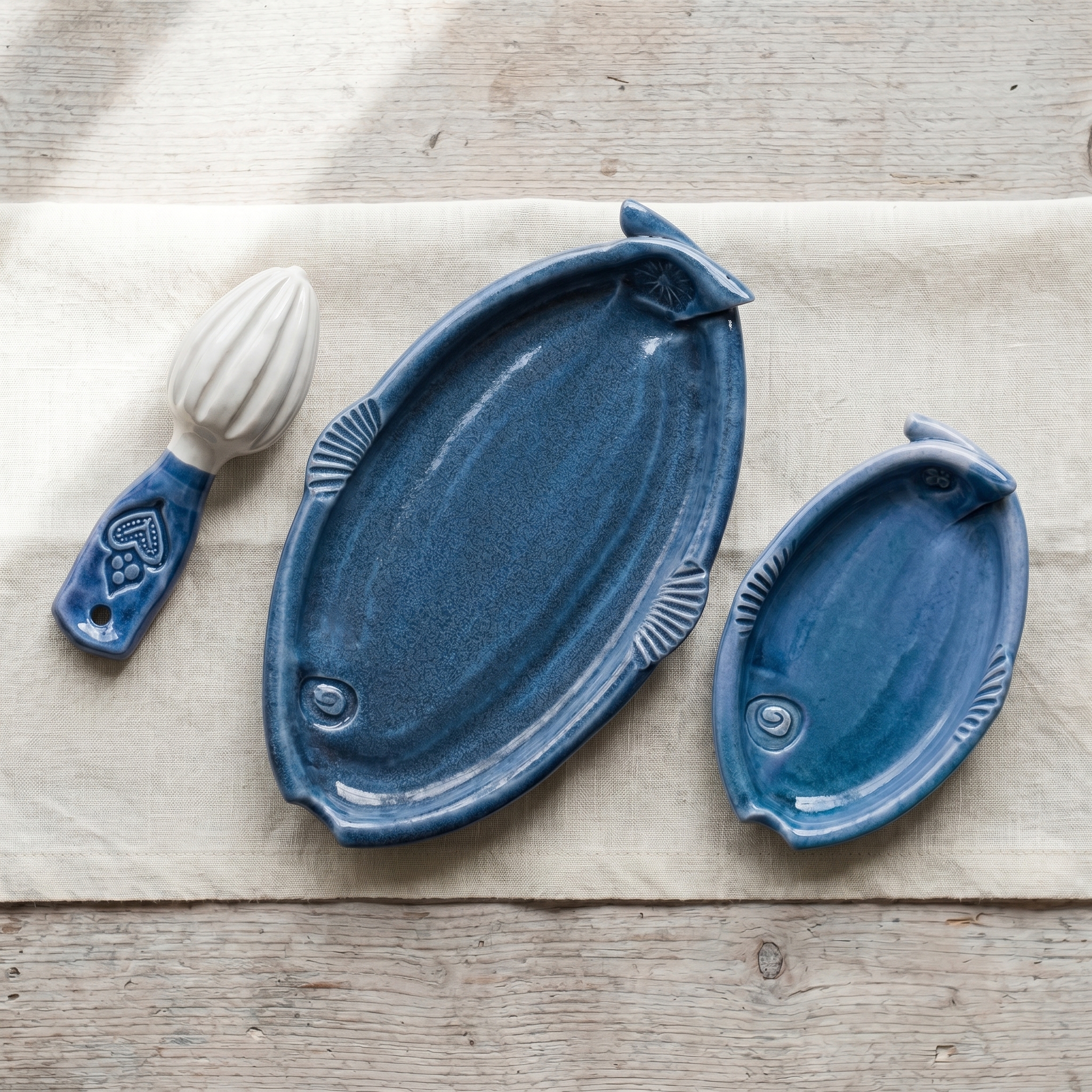
How a Piran fish platter is made
From wedged clay to glaze pour to second firing, what happens between the wheel and the kitchen table.
Read →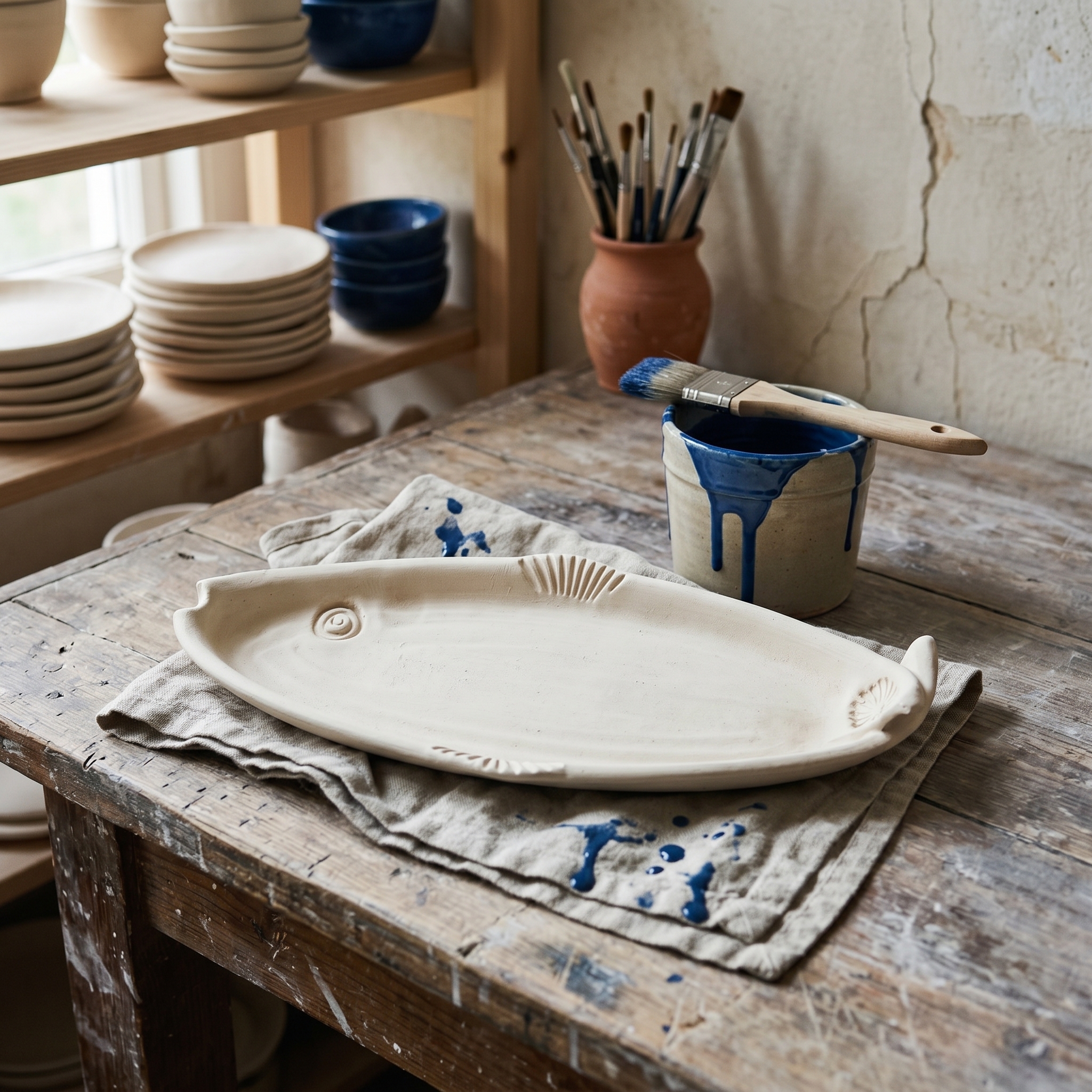
Ten glazes named for Piran
Each colour in the studio is named for a place I look at every day, the sea, the salt-pans, the bell tower at first light.
Read →
What to bring back from Piran
A ceramicist's gift guide, small enough to fit in a carry-on, made one piece at a time on the marina.
Read →